A Secret Mountain Base in Rust Is Better Than a Trap Base Because It Denies Raiders the Fight They Prepared For
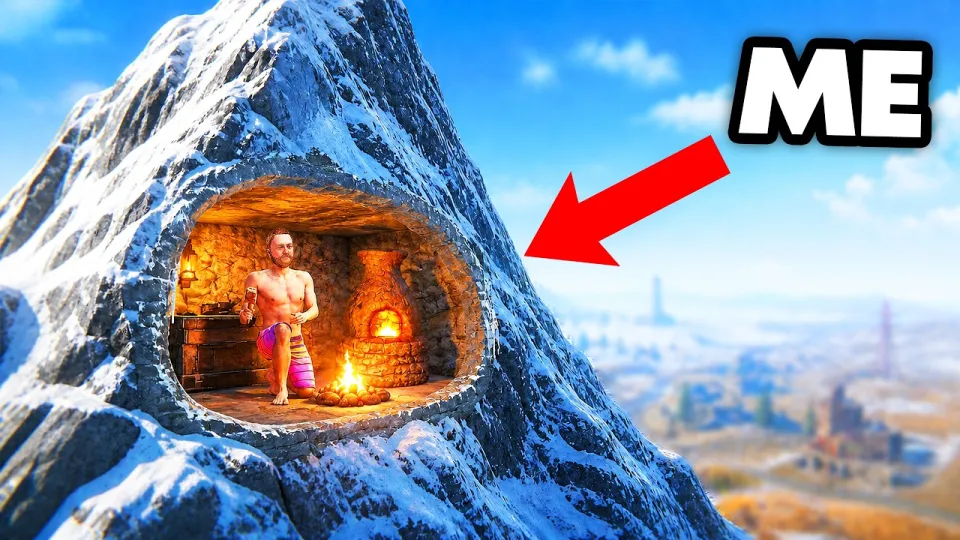
Video: I Lived in a Secret Mountain Base in Rust
Want articles like this for your own video to promote it on YouTube and Google? Order them through the Telegram bot @sat_sit_bot. It writes articles around your video, embeds the video and publishes them on popular niche websites (no ads). Free trial — 50 articles.
· based on the channel Memeio
Key takeaways
- A secret mountain base wins by never being found, not by killing raiders — the trap base only pays off if someone walks in.
- Tiny footprint bases (1x2 or 2x2) built into terrain cost raiders more boom than the loot inside is worth.
- The most common giveaway is silhouette: a base poking out of a ridgeline is visible from the road and from neighbouring peaks.
- Broken wooden spears can be recycled into stone spears, effectively doubling spear count for early eco-raiding.
- Memeio's wipe in a hidden mountain base is the case study, with the full run on the channel and updates at https://x.com/MemeioYT.
A secret mountain base in Rust is the better choice over a trap base when your goal is to keep your loot, because a hidden base removes the raid entirely while a trap base only converts raiders into loot after they have already found you. Camouflage, a small footprint and a location nobody bothers to climb beat any amount of turrets and shotgun traps. The run documented by Memeio on the «I Lived in a Secret Mountain Base in Rust» video is a clean example of the philosophy: one wipe, one tiny base, and a whole lot of players walking past it. Updates and clips from the channel land at Memeio on X.
Why a hidden mountain base in Rust beats a trap base
A trap base and a secret mountain base answer two different questions, and only one of them is about survival. The trap base assumes players will find you and asks how much they lose when they do; the hidden base assumes nobody finds you and asks how long that lasts. On a populated vanilla server the second question is the one that decides whether you keep your sulfur.
Here is the logic in order of importance:
- Detection comes first. Raiders cannot spend boom on a base they never see. A 1x2 tucked against a cliff face behind a rock formation is invisible from the main road, from the monuments and from most of the map's sightlines.
- Raid cost scales with walls, not with loot. A honeycombed 2x2 in a mountain crevice still eats rockets and C4 that cost far more than the contents. Most raiders do the maths and move on.
- Trap bases attract attention. A trap base that kills somebody generates a revenge raid, a Discord callout and a group showing up with satchels. It is a content machine, not a storage solution.
- Mountains are hostile terrain. Climbing costs stamina, exposes raiders to gunfire from above and makes carrying boom awkward. Most groups simply do not patrol ridgelines.
- Small bases are cheap to replace. If the base does get found, losing a 1x2 with a box of components hurts far less than losing a compound.
The honest caveat is that the hidden base produces no stories on its own. That is exactly why the trap base is the better video and the hidden base is the better wipe.
What actually gives a secret base away
Camouflage fails for boring structural reasons, not because raiders are geniuses. The most common mistake is the silhouette: any structure that breaks the line of a ridge is visible from the road, from neighbouring peaks and from a minicopter at altitude. A base that sits proud of the terrain by even a couple of metres reads instantly as a player-made shape against a natural skyline.
The second mistake is light and noise. Furnaces running at night, a campfire glow through a doorway, the sound of a door opening or a workbench being used all carry further than players expect in an empty mountain area. Third is traffic: the same player running the same route to the same cliff every ten minutes is a pattern, and patterns get followed.
What works instead:
- Build into terrain rather than on top of it, using rock outcrops, cliff overhangs and natural dips as two or three of your walls.
- Keep the visible profile below the ridgeline and avoid any structure that sticks out against the sky.
- Use the terrain's own colour palette for building skins where the option exists, and avoid bright doors facing the approach.
- Split storage so a single raided box is not the whole wipe.
- Move loot out of the base after big fights instead of letting it pile up in one obvious room.
A base that looks like a rock from 200 metres away is worth more than four garage doors.
The eco-raiding trick that makes small bases viable
Early-wipe economy decides whether a solo player can afford to live in the mountains at all, and one crafting detail changes the maths. Broken wooden spears can be turned back into materials and re-crafted into stone spears, so a stack of cheap wooden spears effectively doubles your spear count for a fraction of the stone. The order matters: keep the broken spears ahead of the unbroken ones in your inventory so you always know what you are recycling.
This matters because mountain living means constant small fights over nodes and crates rather than big set-piece raids. A player who can sustain spear pressure for twice as long clears monuments and roads far more efficiently, and efficiency is what buys the stone for honeycombing.
A short early-wipe checklist for a mountain solo:
- Secure a sleeping bag and a small stash near the chosen cliff before building anything permanent.
- Farm stone and wood on the mountain itself so your routes never cross the road.
- Craft wooden spears in bulk and recycle the broken ones into stone spears.
- Upgrade the core to stone and honeycomb the side that faces the approach, not the side buried in rock.
- Only then start moving loot in from monuments.
What the viewer questions get right and wrong
Viewers of hidden-base videos tend to split into two camps, and both have a point. One side argues that a base built into a mountain is only invisible to someone who is not looking, and that any player with a minicopter or a habit of scanning ridges will spot it in seconds. That is fair: camouflage buys time, not immunity, and a base that survives a full wipe is usually one that was never worth the rockets rather than one that was truly undetectable.
The other side points out that the real defence is never being raided at all, and that the best-hidden spot is the one nobody has a reason to visit. That is the stronger argument. A base far from monuments, roads and popular farming routes is protected by inconvenience more than by rock. The same reasoning explains why players who come from other survival games recognise the pattern: a 1x2 in a terrain glitch behind a waterfall survives for years because it is boring, not because it is clever.
A third recurring theme is cheating. A perfectly hidden base does not protect you from a player using ESP, and any long run on a populated server will eventually include a suspicious raid. That is a server-population problem, not a base-design problem, and it is worth reporting rather than rebuilding around.
How the wipe actually plays out
A full wipe in a secret mountain base is mostly quiet, and the quiet is the point. The routine is farming on the mountain, running monuments on foot, returning by a route that does not pass the front door, and never leaving a furnace burning after dark. Contact happens when another player climbs the ridge for nodes or a crate, and those fights are short and close, decided by who saw who first rather than by gear.
The value of the location shows up in what does not happen: no door camp, no offline raid, no group rolling up with a raid base. By the time the wipe ends, the base has usually paid for itself several times over in components and scrap that were never lost. It is a slower, less cinematic way to play Rust, and it is the one that keeps a solo player in the game past the first two days.
Useful links
- Memeio on X — clips, updates and announcements from the channel.
- Epidemic Sound — the music library credited for the video's soundtrack.
Final thoughts
A secret mountain base in Rust is not a trick, it is a discipline: small footprint, boring location, no light, no noise, no pattern. The trap base is more fun to watch and the hidden base is more fun to log into the next morning with your loot still there. Memeio's mountain-base wipe is a good stress test of that idea, and the channel is worth following for more solo survival experiments built on the same principle. If you want the short version: build where nobody walks, keep it small enough that raiding it is a waste of boom, and treat silence as the win condition. Follow along at Memeio on X.
Source: I Lived in a Secret Mountain Base in Rust · Markdown version
Questions & answers
Is a secret mountain base in Rust actually safer than a normal base?
It is safer against casual raiders, not against determined ones. A small base built into terrain is hard to spot and expensive to raid relative to its loot, but any base can be found by a player scanning ridges or flying a minicopter. The advantage is that most players never look.
What is the biggest giveaway that a hidden base exists?
Silhouette. A structure that breaks the ridgeline is visible from the road and from other peaks, and it reads as player-made immediately. Light from furnaces and campfires at night, plus a repeated farming route, are the next most common tells.
How do you afford to live in the mountains as a solo player early in a wipe?
Farm stone and wood on the mountain itself so your routes never cross the road, and lean on cheap spears for fights over nodes. Broken wooden spears can be recycled into stone spears, which effectively doubles your spear count for very little stone.
Does a hidden base protect you from cheaters?
No. A player using ESP sees your base regardless of camouflage, and long runs on populated servers will eventually include a suspicious raid. That is a server moderation issue rather than a base-design flaw, so report it instead of rebuilding around it.